

Parents at conventional schools are familiar with the phrase, “summer slide,” referring to what some see as “academic regression” of math, reading, and writing skills among their children during summer break.
At Saint Louis Sudbury School, the idea of summer slide doesn’t necessarily pertain to academic regression, as our students tend to not separate academic learning from all the learning that they do through self-chosen activities and life experiences during their time at Sudbury. They are always learning, everywhere!
That said, “summer slide” can sometimes happen among Sudbury students. After being away from the Saint Louis Sudbury School structure, come September, some Sudbury students have to revive their skills and abilities with self-initiative, independence, taking on responsibility, following through with plans, conflict resolution, asking questions, feeling empowered and valued by a group, seeking how to add value to the people around them, and looking at problems with a playful mindset–all back at school, away from home.
So instead of giving out summer homework (ack, no!), we shared some suggestions with Saint Louis Sudbury School families that offer Sudbury strategies to practice at home during the summer. Sudbury staff and students practice these strategies every day with one another to grow and to nurture our community.
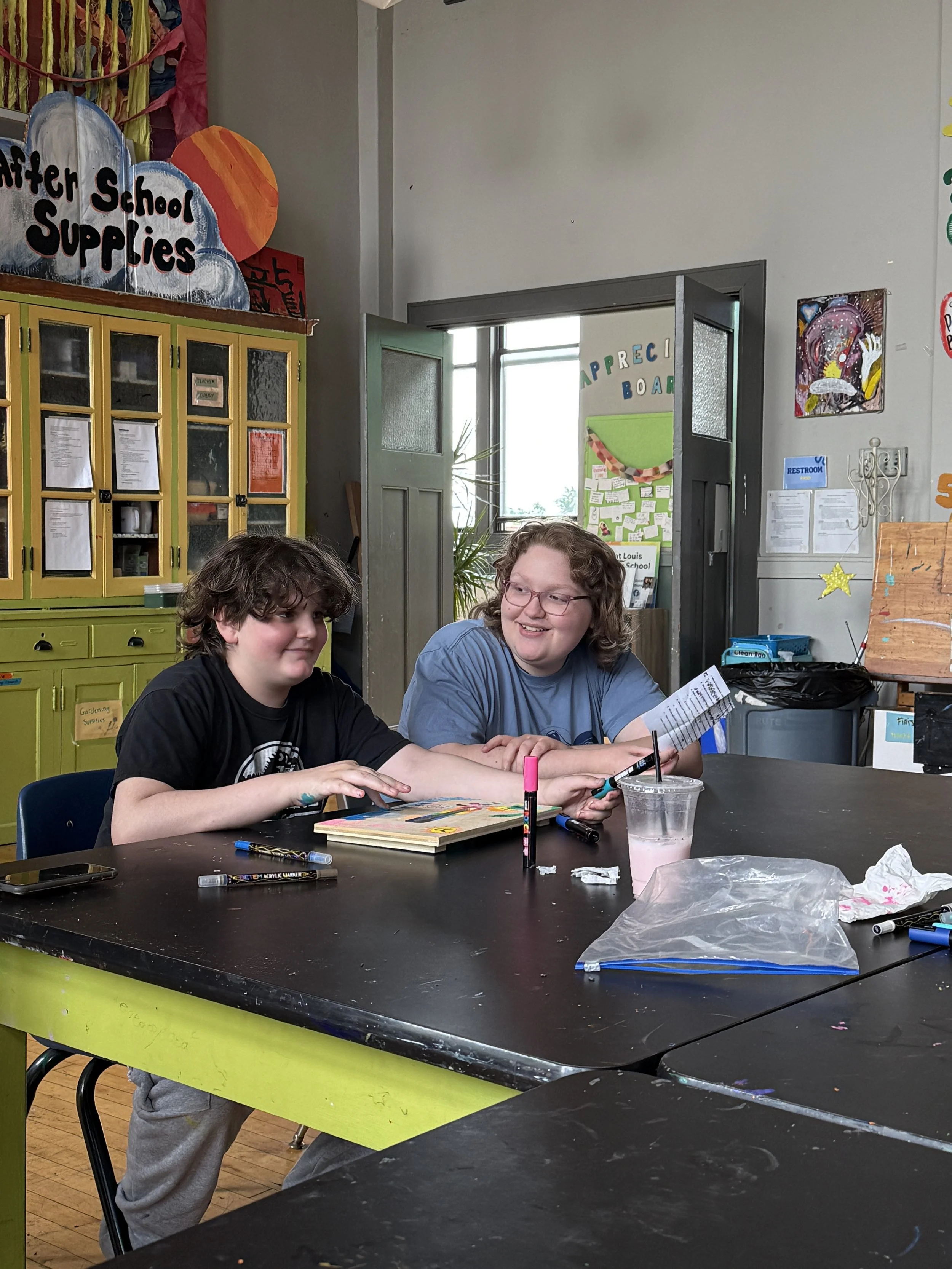
Here is the list that Saint Louis Sudbury School students and staff worked on together in a great discussion at school!
1. If a family member complains about something, ask, “listen or problem solve?” If listen… listen. :-) If problem solve, listen first and then ask, “What do you want to do?”
Example: “I’m hungry.”
Response, “Ahhh.” (Wait) “What would you like to do?” (Wait… and then ask more questions as needed)
This approach repositions the situation into helping the person with the complaint feel that they have an important role in what happens and encourages them to figure out what they want and maybe to ask for help, if they want it.
2. If family members do not already have specific responsibilities at home, have a family meeting and establish tasks as a group that help your household. (And hold each other accountable.) Starting questions around chores for instance with these phrases can help people feel more valued and invested in the process:
“Would you be open to…”
“What are your thoughts about…”
“Would you be interested in…”
“I’m curious if you would be up for…”
3. Model independence and offer space and time for your child to be independent in any shape or form both inside and outside of the house.
4. Model problem solving strategies and conflict resolution inspired by Marshall B. Rosenberg’s Non-Violent Communication method at home. Encourage family members to listen to each other, communicate how they feel and what unmet needs they have, and problem solve together.
5. Everyone in the family matters–both in feeling valued and adding value to those around them. Consider how each of you feels significant (is your voice heard, are you noticed?), appreciated, invested in, and depended on. At Sudbury, we practice mattering every day. Read Jennifer B. Wallace’s book Mattering: The Secret to a Life of Deep Connection and Purpose.
6. Stay connected with the Sudbury community by attending the three family meetups and/or the new families Q&A session with Sudbury staff, see if your kids want to join the school’s Minecraft server, and be sure to look at the Buzz book to contact each other over the summer.
7. Above all, practicing a playful mindset about pretty much anything can be an extraordinarily powerful lens that shifts how you experience life.
Have fun being together, connecting with the world, and learning!
(P.S. If you are looking for a book to read this summer, we strongly recommend the book, The Parent’s Handbook to Unschooling Yourself: A Mindful Guide to Embracing a New Way of Living and Learning With Your Child by Esther Jones.)